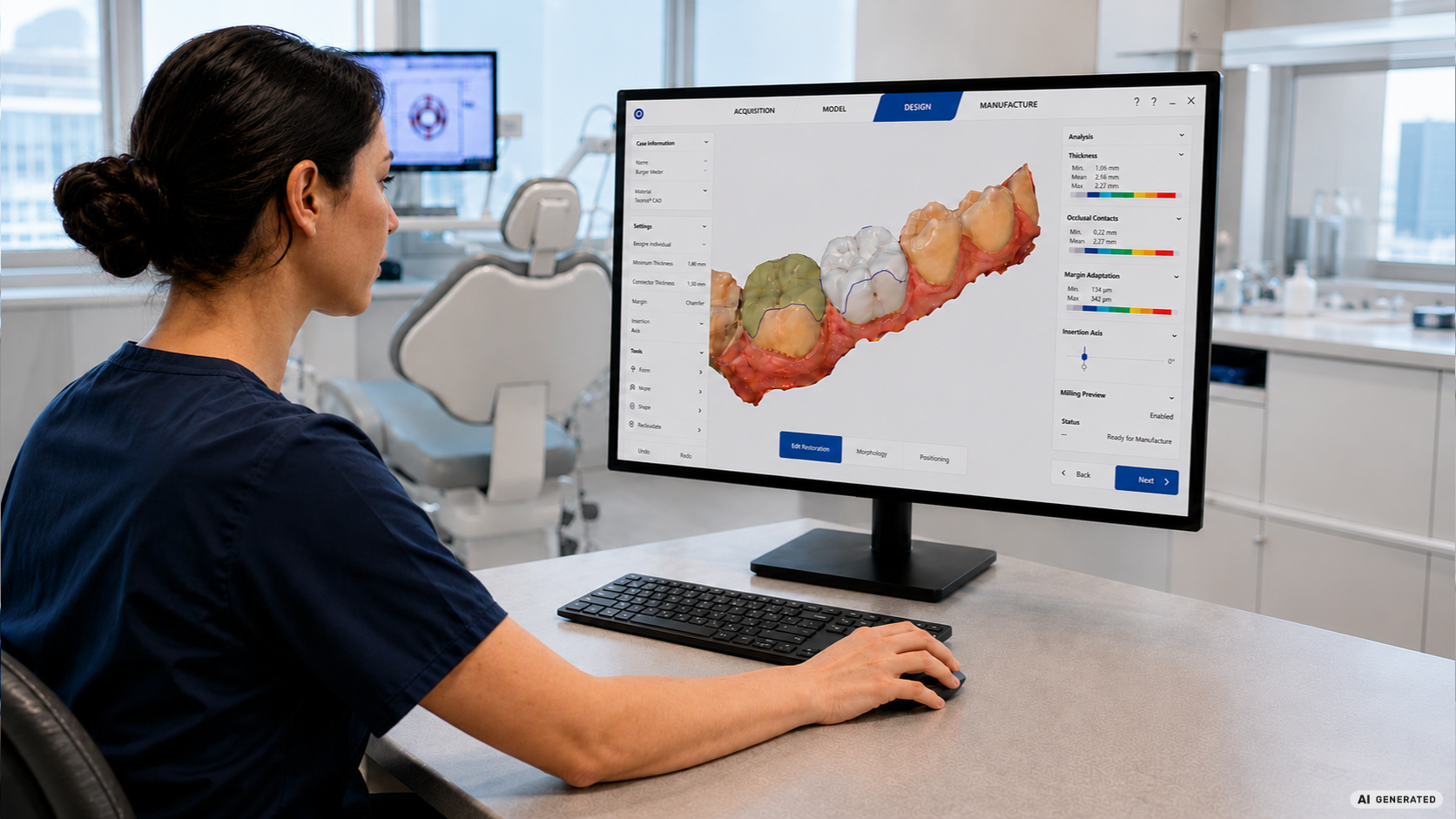
A single-unit crown is not automatically a simple chairside case. Two restorations may look similar on the treatment plan but present very different challenges in the digital workflow. While some restorations can be efficiently completed in a single appointment, others require more extensive planning.
Why case selection is crucial
Digital chairside workflows are particularly well-suited when the initial clinical situation, material requirements, and organizational workflow align. For this reason, the most important clinical factors should be considered before digital planning begins.
-
How much space is available?
-
How large is the defect?
-
How stable is the remaining tooth structure?
-
Are there any functional risks, such as bruxism or unusual occlusion?
-
And what are the patient’s esthetic expectations?
Which cases are generally well-suited for CAD/CAM workflows?
CAD/CAM cases that are easy to plan are often characterized by manageable defect sizes, sufficient space, effective preparation options, and easily controllable function. The more clearly these conditions are met, the easier it is to implement the digital workflow in a standardized and efficient manner.
Cases that require more detailed planning
Dentists should take a closer look at cases involving limited space, significantly reduced tooth structure, high functional loads, or particularly high esthetic demands. In these situations, success is not determined by a single factor, but rather by the planned interplay of preparation, design, materials, and dental expertise.
Conclusion
Successful CAD/CAM cases in the dental practice do not begin with the material or the software. They begin with the correct assessment of the case. Those who consider clinical prerequisites, material requirements and process steps early in the planning process lay the foundation for efficient, reproducible and durable digital restorations. Decisions should be anticipated early rather than made only during treatment.
For more details download the e-paper “The Four-Level Chairside Case Assessment Framework - How to evaluate single-tooth restorations in a digital chairside workflow within minutes” here.
Discover more articles: