.jpg?width=1920&height=680&name=1920x680_ENAMIC%20Header%20(ohne%20Button).jpg)
Ultra fast. Ultra simple.
Grind. Polish. Done.
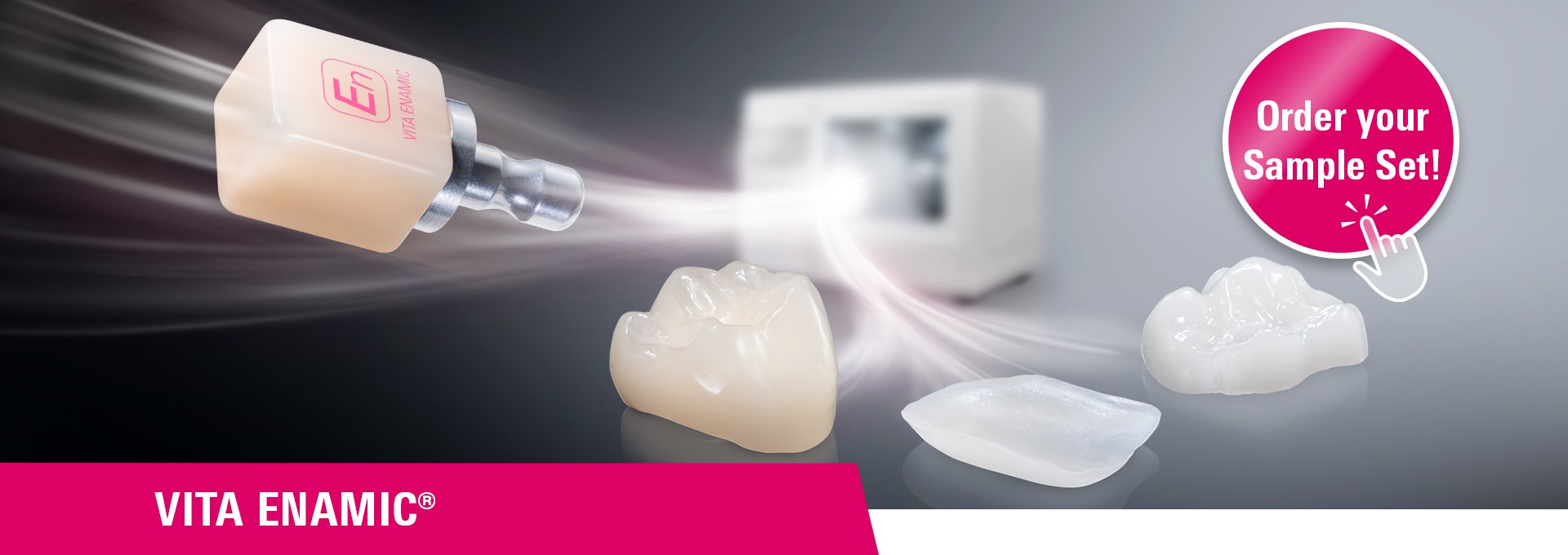
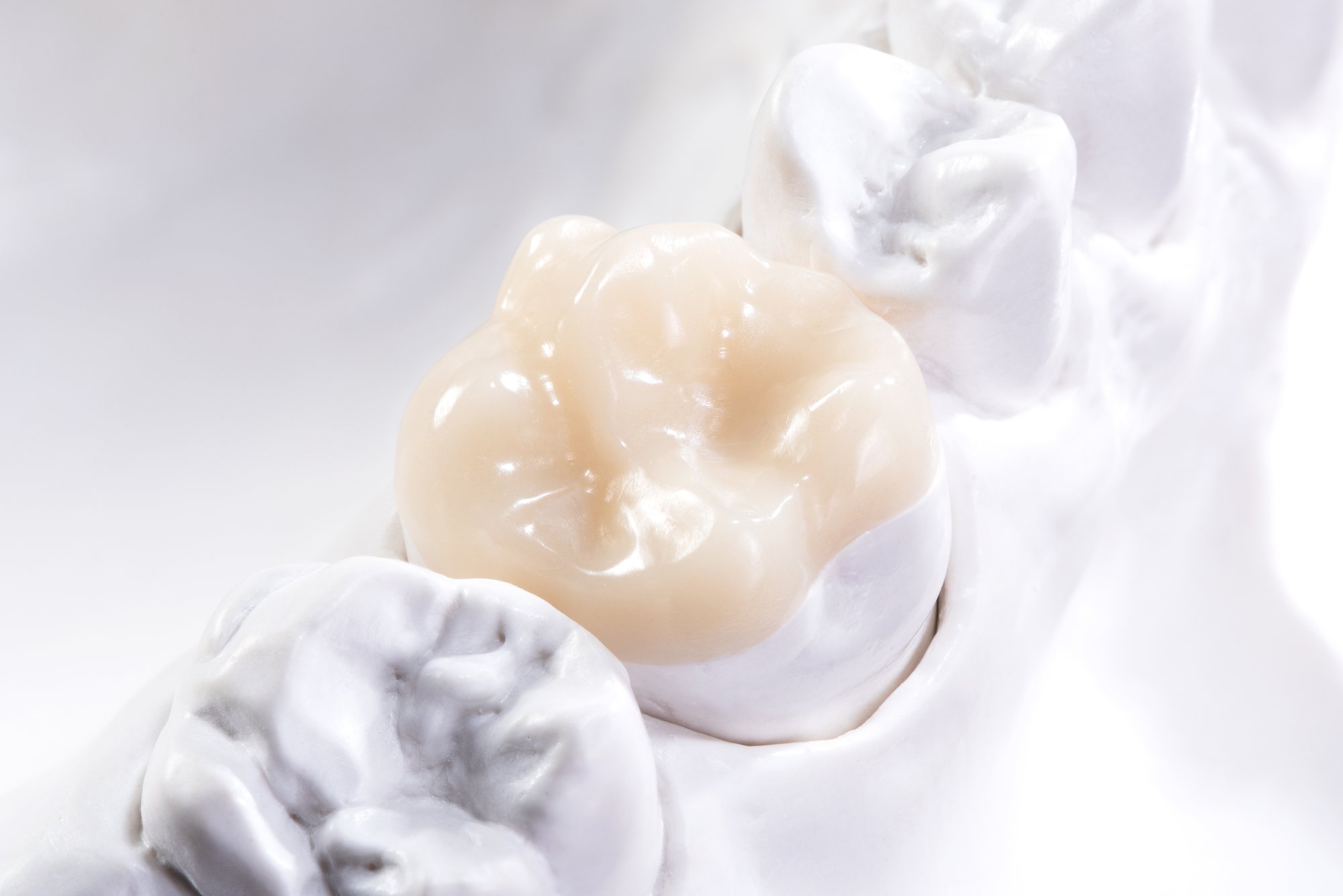
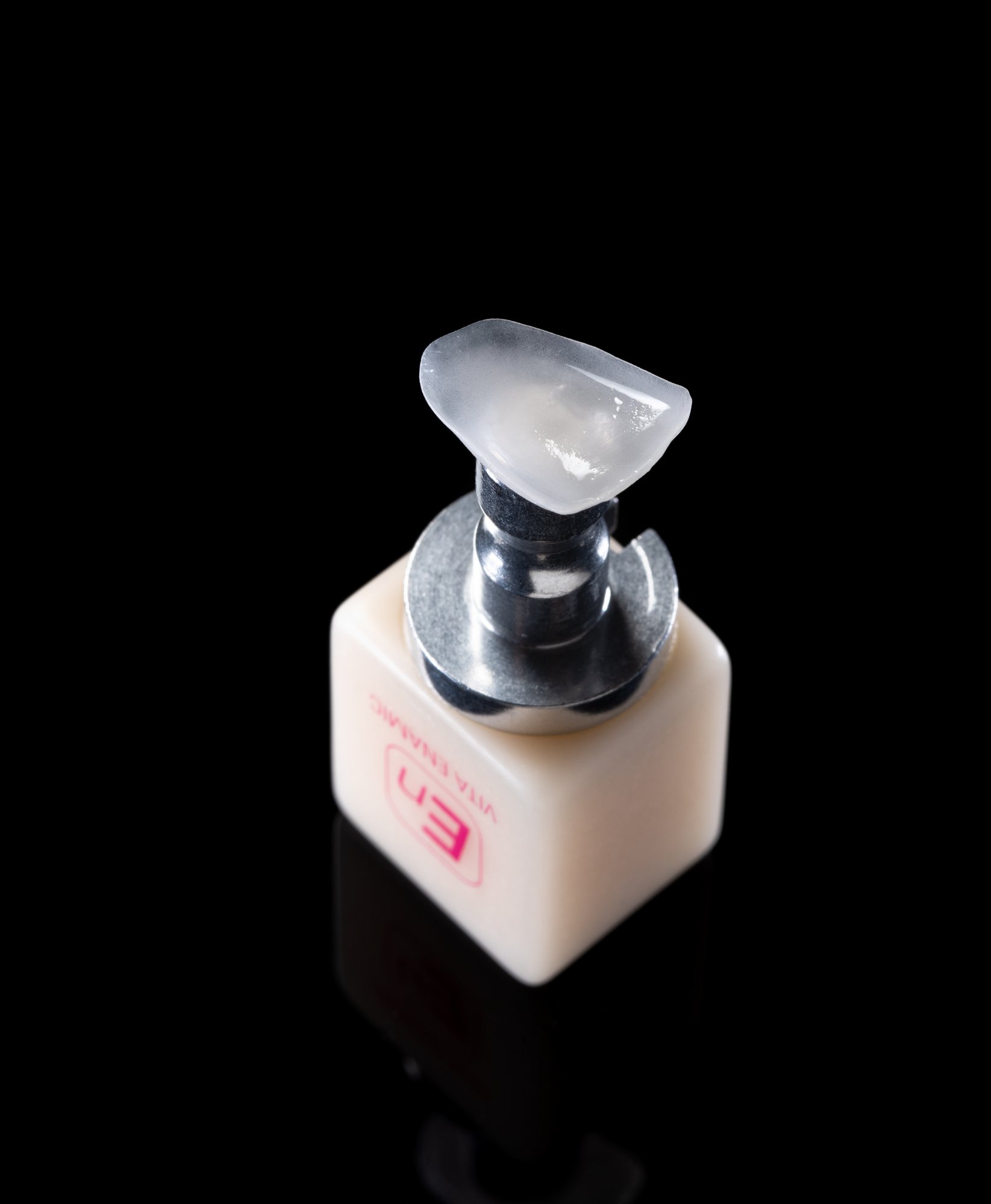
The CAD/CAM block made of unique PICN material—for reliable results, efficient workflows and minimally invasive restorations in just one visit.
What is VITA ENAMIC?
Highlights.
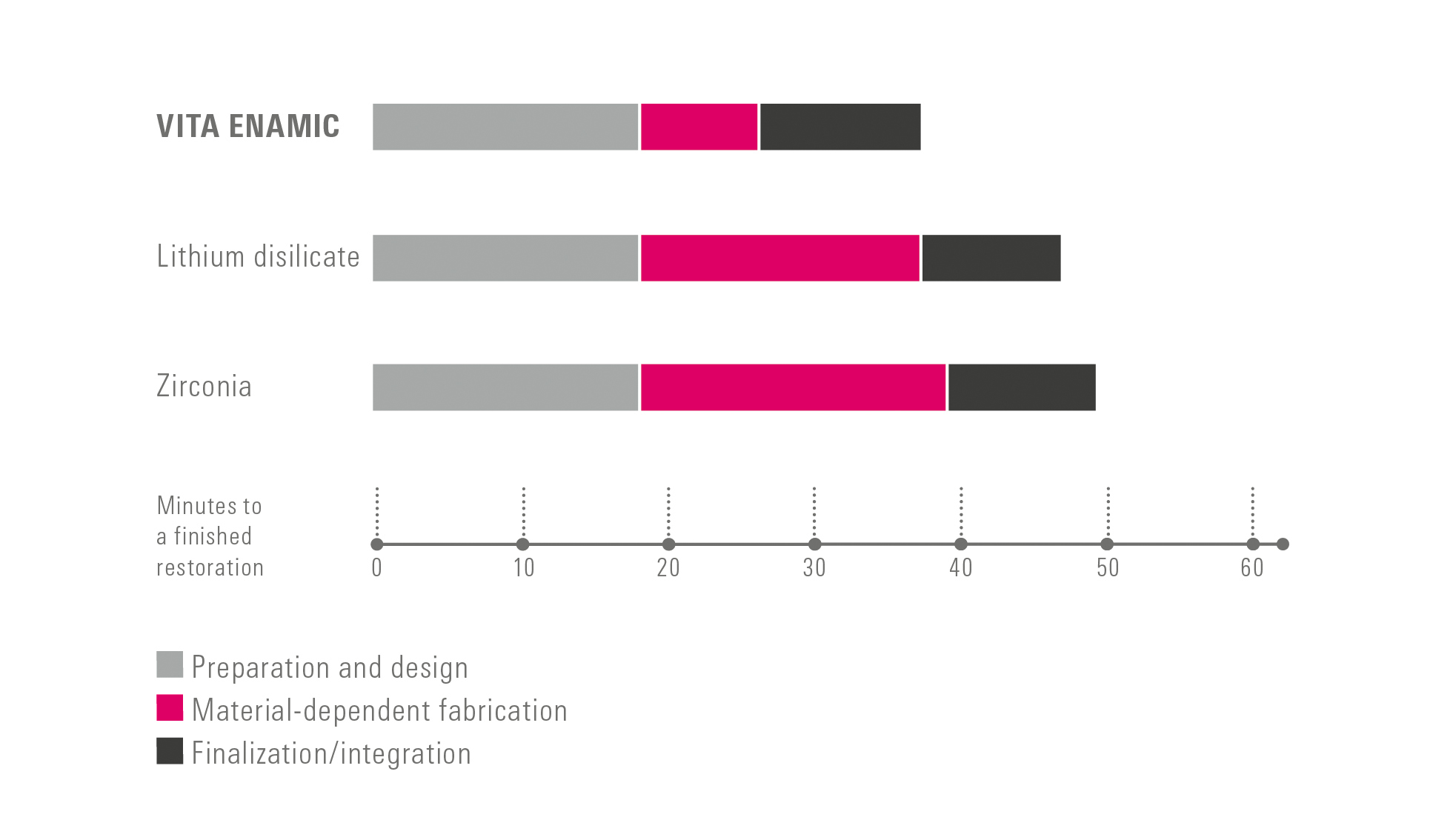
< 40 minutes to a finished restoration
Patient treatment in just one visit.
Efficient Workflow
From the digital scan to the final, integrated restoration —without an additional firing process and with significantly less time required.
Minimum wall thickness of 0.2 mm
Cervical for veneers—for restorations that preserve as much natural tooth structure as possible.
Preserving Tooth Structure. Thin walls allow for minimally invasive preparations and support tooth preservation.
98.4% survival rate
Up to nine years of clinically documented long-term performance.
Clinically Proven
Long-term studies confirm the reliability of VITA ENAMIC even after many years of use.
Strength Meets Flexibility
Thanks to unique PICN technology.
Polymer-Infiltrated Ceramic Network
A balance of strength and elasticity.
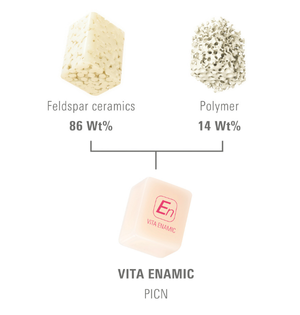
The polymer-infiltrated ceramic network is designed biomimetic properties. It begins with a feldspar ceramic block that serves as the foundation. Polymer is infiltrated into the ceramic under controlled pressure and heat, creating two distinct networks that are seamlessly connected. Not simply a mixture, but a true structure. A material architecture that works differently.
The result: a controlled balance of strength and elasticity.

PICN Benefits at a Glance.
PICN
The material architecture creates a balanced interplay of strength and elasticity.
Dentin-like elasticity
Shock-absorbing cushioning effect that reduces wear on the opposing tooth and provides a natural chewing sensation.
No firing process
Grinding, polishing, finishing—it’s that simple, with no additional firing required.
Minimally Invasive
Maximum preservation of natural tooth structure, thanks to precise restorations that can be ground down to a thickness of 0.2 mm or less.
Comparison based on publicly available manufacturer specifications and published reference data (e.g., grinding and furnace times); process times estimated using a model.
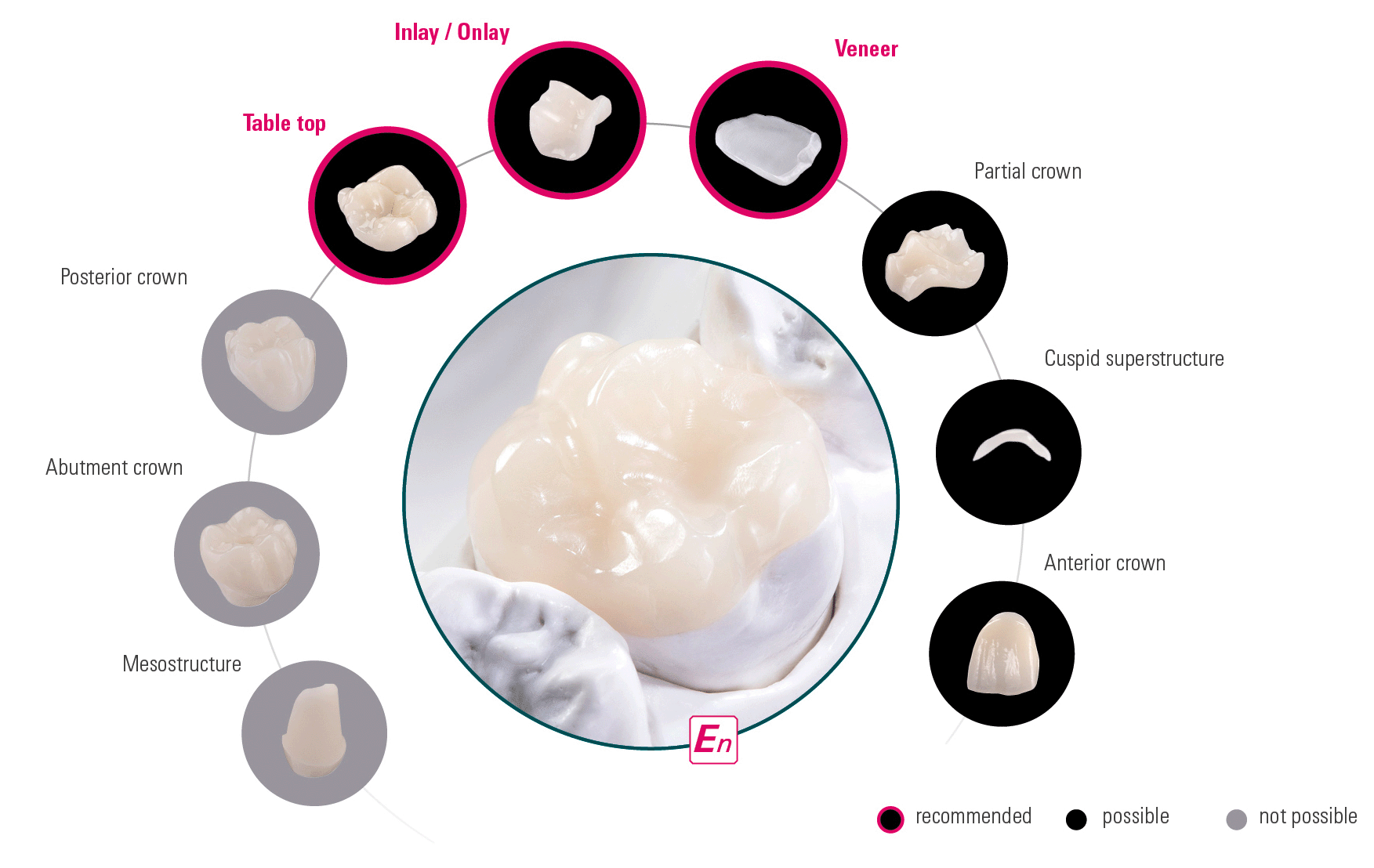
Indications.
The right level of translucency for many indications.
High Versatility for Everyday Practice
VITA ENAMIC HT (High Translucent)
With its balanced translucency, VITA ENAMIC HT offers a versatile solution within the ENAMIC family. It is suitable for numerous indications in the anterior and posterior regions and promotes harmonious integration with the natural tooth structure.
High Esthetics for Demanding Restorations
VITA ENAMIC ST (Super Translucent)
With its exceptionally high translucency, VITA ENAMIC ST offers an esthetic solution within the ENAMIC family. It was developed specifically for table tops, inlays, onlays and veneers and provides a particularly natural light effect.
Excellent long-term results
[1] Oudkerk et al. Dent Mater. 2025;41(5):495-502. The one-step no-prep technique... Results after up to nine years.
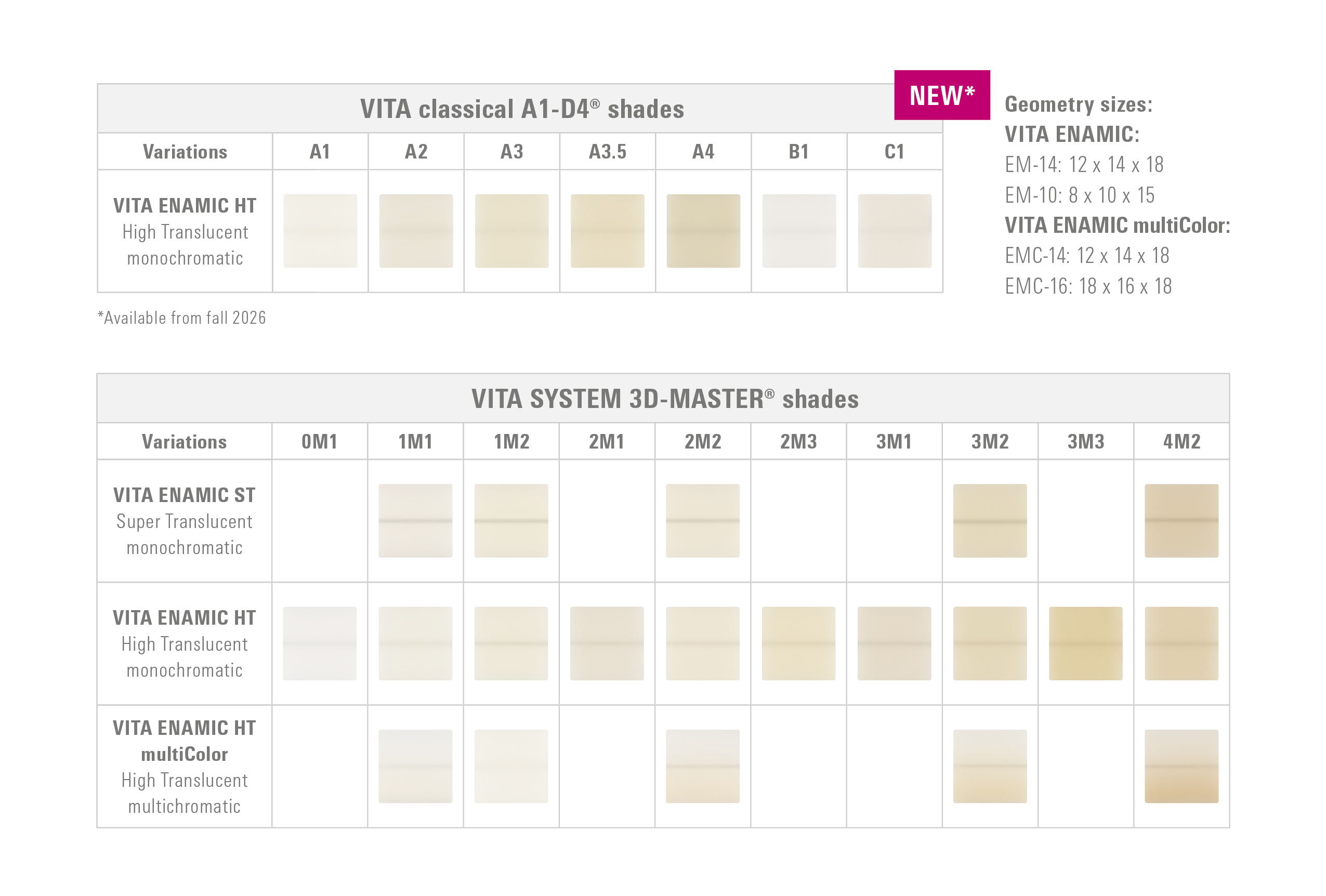
Portfolio Overview.
*Available in fall 2026
Where can you order VITA ENAMIC?
Quickly find a dealer that's right for you.
-
What is VITA ENAMIC?
VITA ENAMIC is a modern dental hybrid material that combines the advantages of ceramic and resin in a single material. This results in dental restorations that look natural, are strong, and—thanks to their slight elasticity—feel particularly comfortable and natural when chewing. In addition, more healthy tooth structure can often be preserved, contributing to a gentle and long-lasting restoration.
-
What does PICN stand for?
PICN stands for Polymer-Infiltrated Ceramic Network. This is a class of materials in which a porous ceramic network is infiltrated by a polymer network, resulting in a dual, interconnected structure.
-
Is PICN the same as hybrid ceramic?
The term “hybrid ceramic” has become established but is vague. It is used to refer to both polymer-infiltrated ceramic networks and ceramic-particle-filled composite blocks, even though these two material classes differ significantly in structure.
In a PICN material such as VITA ENAMIC, the ceramic and polymer form two continuous, interpenetrating networks in a ratio of 86 to 14% by weight. In a composite block, by contrast, the ceramic is embedded as a filler in a polymer matrix and is not continuous. For this reason, we consistently use the term PICN and classify it as a separate material class.
-
For which indications is VITA ENAMIC suitable?
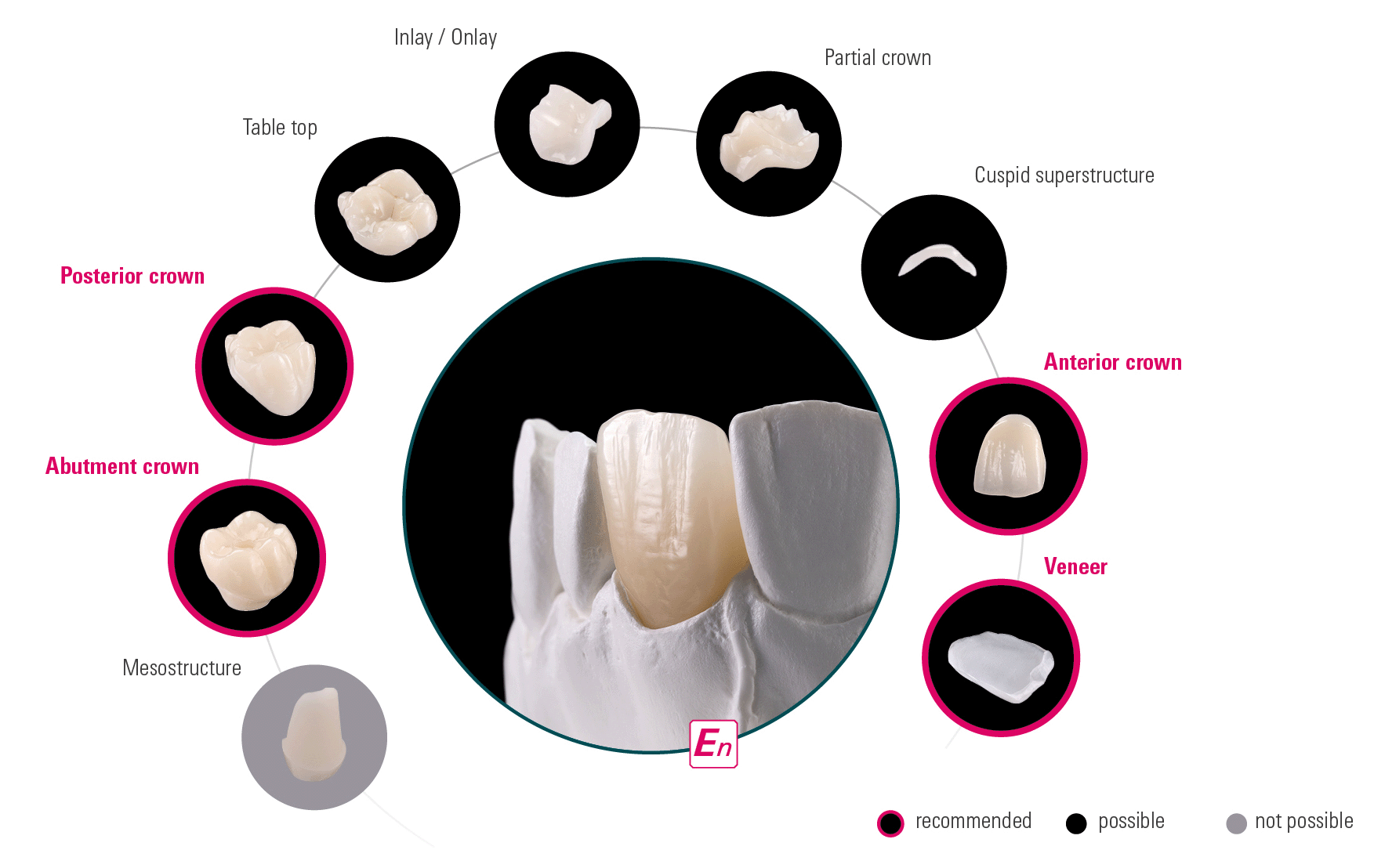
VITA ENAMIC is suitable for a wide range of minimally invasive restorations—including veneers, inlays, onlays, partial crowns, table tops, posterior tooth rebuilds, and crowns in the anterior and posterior regions.
-
What advantages does PICN offer over traditional dental ceramics?
Traditional dental ceramics such as feldspar ceramics, glass ceramics, or lithium disilicate are well-established restorative materials with high aesthetic properties and a strong clinical track record. PICN, however, takes a different approach. The polymer-infiltrated ceramic network of VITA ENAMIC combines ceramic properties with a polymer phase that can absorb functional stresses differently.
A key concept here is the modulus of elasticity. While traditional ceramics are very rigid, PICN—with a modulus of approximately 30 GPa—is significantly less rigid and thus mechanically more similar to natural teeth. This is particularly relevant for biomimetic restoration concepts, in which the restoration should not only be stable but also interact as harmoniously as possible with natural tooth structure. In the context of masticatory forces, stress absorption, and force distribution, this material characteristic can be clinically significant.
PICN also offers practical advantages for CAD/CAM workflows. PICN restorations can be finished and polished directly after milling in many digital processes. There is no need for a firing, sintering, or crystallization process: Restorations made of VITA ENAMIC must not be fired under any circumstances during processing. As a result, PICN is often associated with chairside restorations, same-day dentistry, minimally invasive preparation, and tooth-preserving restorations. -
How minimally invasive is the treatment?
Thanks to the unique PICN network structure, highly stable restorations can be achieved with minimal invasiveness even at wall thicknesses as low as 0.2–0.6 mm. This allows for maximum preservation of natural tooth structure.
-
Is VITA ENAMIC suitable for implants?
Yes, VITA ENAMIC is indicated for anterior and posterior crowns on implants. The hybrid ceramic combines the strength of a ceramic with a certain degree of elasticity thanks to its PICN network. This results in force-absorbing and antagonist-friendly properties. However, clinical suitability always depends on the specific indication and must be assessed in accordance with the respective processing and cementation guidelines.
-
How does VITA ENAMIC differ from zirconia?
Criterion
VITA ENAMIC
Zirconia
Material
PICN (hybrid ceramic)
Oxide ceramic
Preparation
From 0.2 mm
From 0.5–0.6 mm
Firing process
No
Yes
Processing time
>30% faster
Longer
Chairside
Very well suited
Limited
VITA ENAMIC enables minimally invasive restorations with high efficiency. Thanks to its PICN structure, the elimination of a sintering process, and the minimal material thickness required, the material is particularly well-suited for quick chairside treatments and the maximum preservation of tooth structure. Zirconia, on the other hand, offers greater strength and is frequently used for applications subject to higher loads.
-
Why is VITA ENAMIC considered particularly cost effective?
VITA ENAMIC can be processed directly without an additional firing step. This reduces the number of process steps, saves time, and enables efficient restorations—often in just one appointment.
-
What advantages does VITA ENAMIC offer for CAD/CAM workflows?
VITA ENAMIC is based on PICN (Polymer-Infiltrated Ceramic Network) technology and was developed for efficient digital CAD/CAM workflows. The material can be machined with precision and enables thin-walled, minimally invasive restoration designs. Since neither a crystallization nor a sintering firing is required after CAM fabrication, restorations can be polished and placed immediately after grinding. This reduces the number of process steps and shortens production time.
The PICN structure also supports efficient CAM machining. Compared to traditional ceramic materials, the material’s inherent elasticity and lower brittleness allow for gentler machining with a reduced risk of edge chipping during the grinding process. Users also report less wear on grinding tools and fewer bur changes, which can offer additional cost-saving benefits in day-to-day laboratory and practice operations.
In addition, the integrated shade and translucency gradients of the MultiColor variants support an efficient aesthetic workflow with reduced customization effort.
-
How is VITA ENAMIC finalized?
After grinding, VITA ENAMIC is either polished directly or customized using light-curing characterization and glaze materials and then polymerized. No additional firing process is required.
-
Which CAD/CAM systems are supported?
VITA ENAMIC is designed for use in standard CAD/CAM systems.
VITA ENAMIC – SYSTEM SOLUTIONS*
VITA offers VITA ENAMIC with specific holder systems for the following CAD/CAM systems:
- CEREC/inLab (Dentsply Sirona)
- PlanMill 40/PlanMill 40S/PlanMill 50S (Planmeca)
- VITA ENAMIC – UNIVERSAL SOLUTIONS*
- Arum Dental (5x series)
- CORiTEC Series (imes-icore GmbH)
- Röders RXD Series (Röders GmbH)
- DGSHAPE DWX Series (DGSHAPE Corporation)
- CS 3000/CS3100 (Carestream Dental, Inc.)
- Zfx Inhouse5x (Zfx GmbH)
- Milling UNIT M Series (Zirkonzahn S.r.l.)
- N4/R5/S1/S2/Z4 (vhf camfacture AG)
- Organical Desktop Series (R+K CAD/CAM Technologie GmbH)
- DMG ULTRASONIC Series (DMG Mori AG)
- UP3D (Modelle: P42, P53, P55D)
- MB Maschinen / orangedental (Modelle: Easymill 4, Easymill 5)
- Dental Machine / Tecno Ganz (Modelle: Vector, Axymat)
*) Notes: The range of variants, geometries, and colors available for VITA CAD/CAM materials may vary depending on the individual CAD/CAM system partner or system. Please contact the respective CAD/CAM system partners for the applicable hardware and software requirements.
-
What long-term data is available for VITA ENAMIC?
“For PICN materials—including VITA ENAMIC, the pioneer and best-known representative of this material class—a recent study reports survival rates of up to 98.4% after 9 years.”
The PICN research visualization refers to the work of Oudkerk et al. (2025) as well as other long-term clinical data. In addition, it describes high aesthetic stability and material properties that are gentle on opposing teeth.
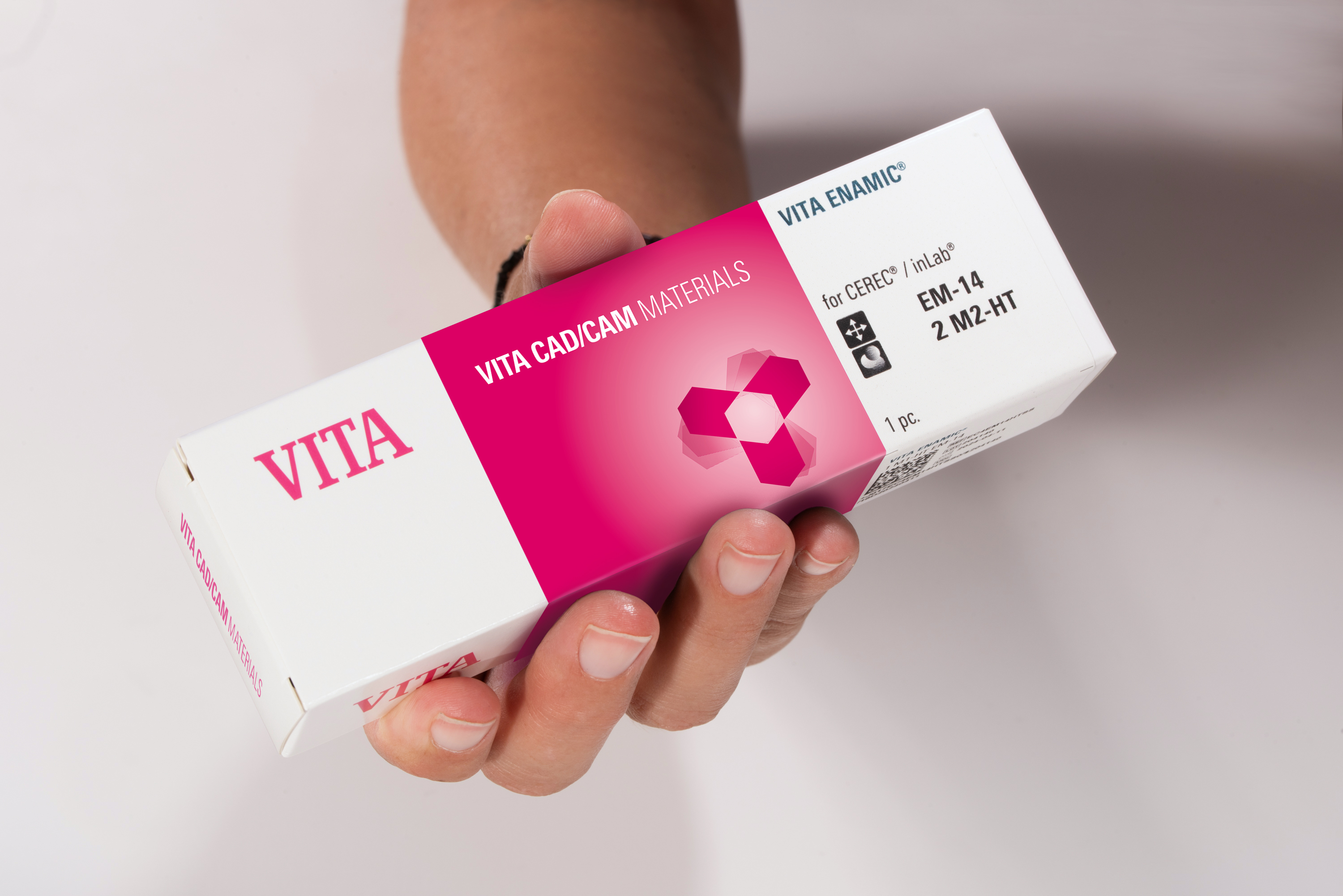
VITA ENAMIC multiColor Sample Set HT, 2M2
VITA ENAMIC monoColor Starter Set HT, A2, A3*
1 block of VITA ENAMIC monoColor for CEREC/inLab A2
1 block of VITA ENAMIC monoColor for CEREC/inLab A3

Stay ahead of the game with the VITA ACADEMY
Get started now: Discover our wide range of courses, webinars, and practical tutorials for immediate success in your daily practice.
VITA Zahnfabrik H. Rauter GmbH & Co. KG
Spitalgasse 3
79713 Bad Säckingen
Germany
Phone: +49 7761 562 0
Hotline: +49 7761 562-222
E-Mail: info@vita-zahnfabrik.com
© 2026 VITA Zahnfabrik. All rights reserved.